Dharmapada:-
The Dhammapada is a versified
Buddhist scripture traditionally ascribed to the Buddha himself. The
title, Dhammapada, is a compound term composed of dhamma and pada, each
word having a number of denotations and connotations. Generally, dhamma
can refer to the Buddha's "doctrine" or an "eternal truth" or
"righteousness" or all "phenomena" and, at its root, pada means "foot"
and thus by extension, especially in this context, means either "path"
or "verse" or both. In simple words Dharma is spiritual living and pada
means foot or way, so Dharma Pad is way of living a spiritual life.
Tripitaka:-
Tripitaka is a traditional term used to
describe their various types of standard scriptures. Tripitak
traditionally contains three baskets of teachings: a Sutra Pitika , a
Vinaya Pitika and an Abhidharma Pitika. As it has three Pitika it is
called Tripitaka.


 The temple enshrines site of Buddha’s birth. The modern temple is white
building that protects ancient ruins and it is surrounded by brick
foundations of ancient temple and monasteries. Atop the temple is a
squqre tower with Buddha eyes on each side with a golden pinnacle on its
top. Some of the delicate sandstone sculptures are now in National
Museum in Katmandu for preserving them. A shrine of importance is Bas-relief Image of Maya Devi, which is kept
in small pagoda. It has image of Maya Devi supporting herself by Sal
tree and infant lord Buddha standing on a lotus pedestal. Also there is
two other celestial figures depicted in act of pouring water over the
lotuses gifted from heaven.
The temple enshrines site of Buddha’s birth. The modern temple is white
building that protects ancient ruins and it is surrounded by brick
foundations of ancient temple and monasteries. Atop the temple is a
squqre tower with Buddha eyes on each side with a golden pinnacle on its
top. Some of the delicate sandstone sculptures are now in National
Museum in Katmandu for preserving them. A shrine of importance is Bas-relief Image of Maya Devi, which is kept
in small pagoda. It has image of Maya Devi supporting herself by Sal
tree and infant lord Buddha standing on a lotus pedestal. Also there is
two other celestial figures depicted in act of pouring water over the
lotuses gifted from heaven. In 249 BC Emperor Ashoka visited Lumbini and he marked the birth
place of Lord Buddha by constructing a Stone Pillar surrounded by four
Stupas. The Pillar has an inscriptions in Bhrami which translates as
“King Piyadasi (Ashoka), beloved of devas, in the 20 year of the
coronation, himself made a royal visit, Buddha Sakyamuni having been
born here, a stone railing was built and a stone pillar erected to the
Bhagavan ["blessed one"] having been born here. Lumbini village was
taxed reduced and entitled to the eight part (only)”.
In 249 BC Emperor Ashoka visited Lumbini and he marked the birth
place of Lord Buddha by constructing a Stone Pillar surrounded by four
Stupas. The Pillar has an inscriptions in Bhrami which translates as
“King Piyadasi (Ashoka), beloved of devas, in the 20 year of the
coronation, himself made a royal visit, Buddha Sakyamuni having been
born here, a stone railing was built and a stone pillar erected to the
Bhagavan ["blessed one"] having been born here. Lumbini village was
taxed reduced and entitled to the eight part (only)”.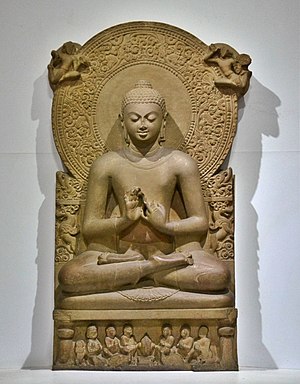 the Indian subcontinent on whose teachings Buddhismas founded. The word Buddha is a title for the first awakened being in an era. In most Buddhist traditions, Siddhartha Gautama is regarded as the Supreme Buddha of our age, "Buddha" meaning "awakened one" or "the enlightened." Gautama Buddha may also be referred to as Śākyamuni. Gautama taught a Middle Way compared to the severe asceticism


 Dhaulagiri is the seventh highest Mountain
 Cho Oyu
is the sixth highest mountain in the world, located a short distance to the
west from Everest (the highest) and Lhotse (the fourth highest) in the
Khumbu region of Eastern Nepal along the Tibetan border. Its towering peak
stands with Everest well above the surrounding mountains. It became a
familiar landmark to climbers ascending Everest's north face. Just west of
Cho Oyu is the Nangpa La, a 19,000-foot glacier pass, the main trade route
between the Khumbu Sherpas and Tibet.
Cho Oyu
is the sixth highest mountain in the world, located a short distance to the
west from Everest (the highest) and Lhotse (the fourth highest) in the
Khumbu region of Eastern Nepal along the Tibetan border. Its towering peak
stands with Everest well above the surrounding mountains. It became a
familiar landmark to climbers ascending Everest's north face. Just west of
Cho Oyu is the Nangpa La, a 19,000-foot glacier pass, the main trade route
between the Khumbu Sherpas and Tibet.
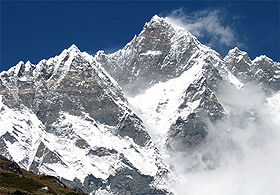
 The Kanchenjunga is also the mountain of Nepal which is located eastern part of Nepal. It has also its own importance like Mt.Everest. Mount
Kanchenjunga is one of the world's most spectacular mountains. It is renowned as
the queen of mountains. Kangchenjunga is the third highest peak on the planet,
can boast of varied ecological zones, from the subtropical land to glacial
wilderness. Mighty Kangchenjunga glacier is the most famous attraction of
Kanchenjunga. Great valleys, encircled by high
The Kanchenjunga is also the mountain of Nepal which is located eastern part of Nepal. It has also its own importance like Mt.Everest. Mount
Kanchenjunga is one of the world's most spectacular mountains. It is renowned as
the queen of mountains. Kangchenjunga is the third highest peak on the planet,
can boast of varied ecological zones, from the subtropical land to glacial
wilderness. Mighty Kangchenjunga glacier is the most famous attraction of
Kanchenjunga. Great valleys, encircled by high 
