Location:
|
|
Attractions:
|
Various species of Fauna and Flora
|
Timing:
|
10:30 AM to 5 PM, except Saturday
|
The Natural History Museum of Nepal
is located near the Swayambhunath Hill and has a stable partnership
with the Institute of Science and Technology. Together, they coordinate
projects and programs to aid in the research and preservation of rare
and threatened fauna and flora species. Though
it is among the least frequented museums in the Valley, a visit to the
museum will show you many rare birds and insect species Since the opening of the Natural History Museum, the institute’s popularity has increased over the years solidifying its importance amongst the museums of Nepal.
Many
scientists around the world have a great fascination with the fauna and
flora of Nepal. Because Nepal has an extremely varied landscape with
high altitudes and diverse vegetation, it can be hard to believe that
Nepal would have many flowering plants. If that is what you think, you
would be wrong. The small country of Nepal has approximately half the
amount of flowering plants that would be found in other countries - such
as the United States of America. This alone makes Nepal extremely
interesting to botanists. This amazing diversity can be seen in the
exhibition hall of the Natural History Museum which boasts with more
than 9 000 plant specimens, both non-flowering and flowering.
Nature
does not only consist of plants, trees and flowers, but animals,
insects and other earthly creatures. The Natural History Museum of Nepal
therefore offers visitors a spectacular collection of approximately 40
000 invertebrates and vertebrates. Interesting fossils, prehistoric
shells, butterfly collections, snakes and a 100 skeletal remains are
also on display. For those who are interested in seeing skeletons that
have not lost their outer layers, the Nepal Natural History Museum has many stuffed crocodiles, birds and various animals in their exhibits.
There
is a separate section for insects too that contains various insects
collected from the nook and corners of Himalayas. Many of these species
are now extinct. The same is true for various species of mammals and
other amphibians. All of these displays are organized as per their
evolution. It has a separate section for plants too. This section
contains various herbs and grasses that grow in Himalayas and Tarai
region. This section is not as comprehensive as the section on fauna but
is equally interesting. The museum is slowly picking up on the tourist
map but is in dire straits because of the lack of fund. If you are a
biologist then this place is a boon for you. If you are not, then also
this place is worth visiting.
For
students, researchers, scholars and botanists, the Nepal Natural
History Museum is the answer to all their questions. The museum is able
to educate the public, and others who are interested, in the life cycles
of birds, animals and plants that are able to survive at high
altitudes. The Institute of Science and Technology and the Natural
History Museum work together to record the plants and creatures found
naturally in Nepal. They also research better ways to conserve and
protect this unique natural landscape. Nepal is a land of wonder because
of its fauna and flora, and the Natural History Museum hopes to educate
people to respect and protect their beautiful natural surroundings.


 The temple enshrines site of Buddha’s birth. The modern temple is white
building that protects ancient ruins and it is surrounded by brick
foundations of ancient temple and monasteries. Atop the temple is a
squqre tower with Buddha eyes on each side with a golden pinnacle on its
top. Some of the delicate sandstone sculptures are now in National
Museum in Katmandu for preserving them. A shrine of importance is Bas-relief Image of Maya Devi, which is kept
in small pagoda. It has image of Maya Devi supporting herself by Sal
tree and infant lord Buddha standing on a lotus pedestal. Also there is
two other celestial figures depicted in act of pouring water over the
lotuses gifted from heaven.
The temple enshrines site of Buddha’s birth. The modern temple is white
building that protects ancient ruins and it is surrounded by brick
foundations of ancient temple and monasteries. Atop the temple is a
squqre tower with Buddha eyes on each side with a golden pinnacle on its
top. Some of the delicate sandstone sculptures are now in National
Museum in Katmandu for preserving them. A shrine of importance is Bas-relief Image of Maya Devi, which is kept
in small pagoda. It has image of Maya Devi supporting herself by Sal
tree and infant lord Buddha standing on a lotus pedestal. Also there is
two other celestial figures depicted in act of pouring water over the
lotuses gifted from heaven. In 249 BC Emperor Ashoka visited Lumbini and he marked the birth
place of Lord Buddha by constructing a Stone Pillar surrounded by four
Stupas. The Pillar has an inscriptions in Bhrami which translates as
“King Piyadasi (Ashoka), beloved of devas, in the 20 year of the
coronation, himself made a royal visit, Buddha Sakyamuni having been
born here, a stone railing was built and a stone pillar erected to the
Bhagavan ["blessed one"] having been born here. Lumbini village was
taxed reduced and entitled to the eight part (only)”.
In 249 BC Emperor Ashoka visited Lumbini and he marked the birth
place of Lord Buddha by constructing a Stone Pillar surrounded by four
Stupas. The Pillar has an inscriptions in Bhrami which translates as
“King Piyadasi (Ashoka), beloved of devas, in the 20 year of the
coronation, himself made a royal visit, Buddha Sakyamuni having been
born here, a stone railing was built and a stone pillar erected to the
Bhagavan ["blessed one"] having been born here. Lumbini village was
taxed reduced and entitled to the eight part (only)”.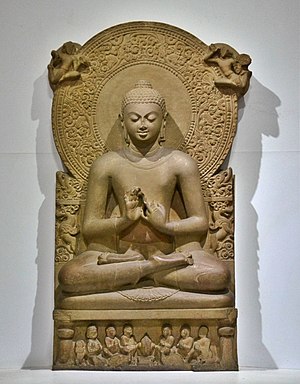 the Indian subcontinent on whose teachings Buddhismas founded. The word Buddha is a title for the first awakened being in an era. In most Buddhist traditions, Siddhartha Gautama is regarded as the Supreme Buddha of our age, "Buddha" meaning "awakened one" or "the enlightened." Gautama Buddha may also be referred to as Śākyamuni. Gautama taught a Middle Way compared to the severe asceticism


